
Introduction
When someone checks their kidney function, two terms frequently appear in lab reports: serum creatinine and eGFR. While creatinine gives a rough idea about kidney performance, eGFR (estimated Glomerular Filtration Rate) offers a more meaningful and clinically useful interpretation.
Creatinine alone can sometimes be misleading. eGFR refines that information and translates it into a clearer picture of how efficiently your kidneys are filtering blood.
Understanding eGFR is essential not only for patients with kidney disease but also for people with diabetes, hypertension, heart disease, or even those undergoing routine health checkups.
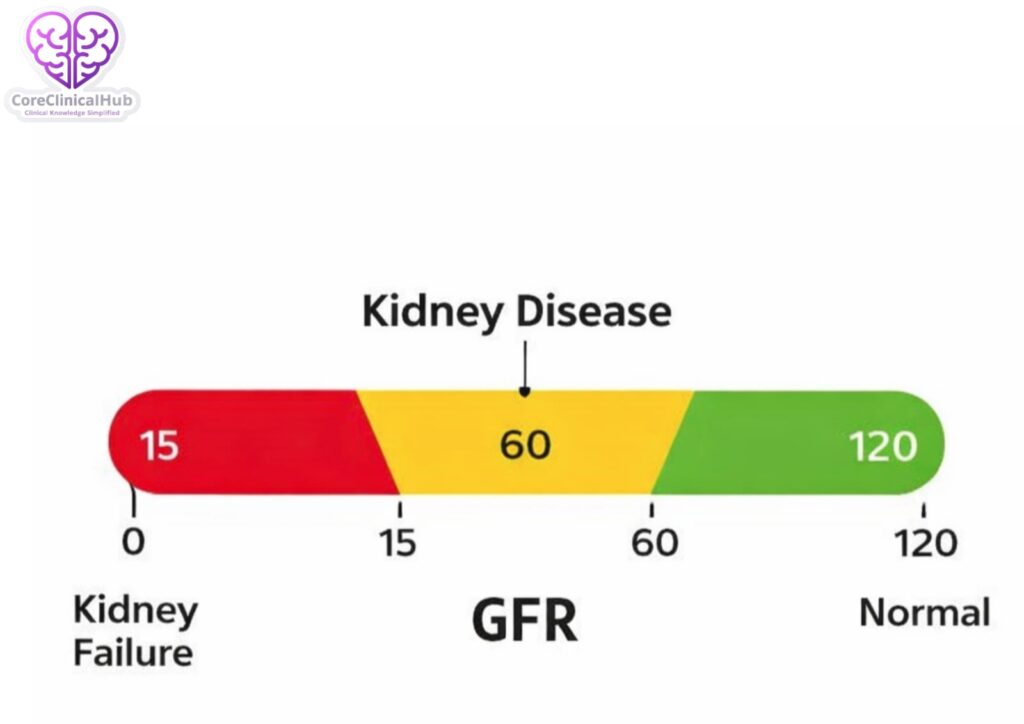
What Is eGFR?
eGFR stands for estimated Glomerular Filtration Rate.
It represents the approximate amount of blood filtered by the kidneys every minute. More specifically, it estimates how much blood passes through the glomeruli — tiny filtering units inside the kidneys — each minute.
It is expressed in:
mL/min/1.73 m²
The 1.73 m² refers to an average adult body surface area, allowing results to be standardized across individuals.
How eGFR Is Linked to Creatinine
Creatinine is a waste product generated from muscle metabolism. It is filtered by the kidneys and excreted in urine.
When kidney function declines:
- Creatinine levels increase.
- eGFR decreases.
However, creatinine alone cannot accurately reflect kidney function because it depends on:
- Age
- Sex
- Muscle mass
- Body size
- Ethnicity
For example:
- A muscular young adult may have slightly higher creatinine but normal kidney function.
- An elderly person may have “normal” creatinine but reduced kidney filtration.
This is where eGFR becomes important. It uses creatinine along with age and sex to calculate a more accurate estimate of kidney function.
How Is eGFR Calculated?
eGFR is derived using mathematical equations that include:
- Serum creatinine
- Age
- Sex
- Sometimes body size
Commonly used equations in clinical practice include:
- CKD-EPI equation
- MDRD equation
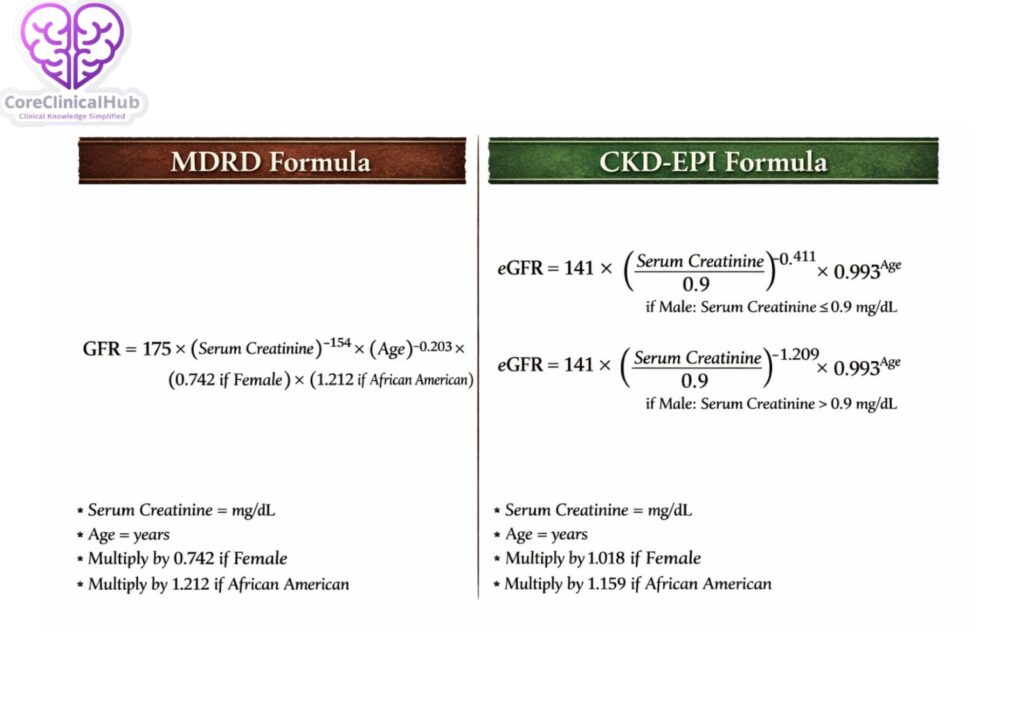
These formulas were developed through large population studies to improve accuracy in assessing kidney function.
The result is automatically calculated by most modern laboratories whenever creatinine is tested.
What Is a Normal eGFR?
eGFR values are generally interpreted as:
- 90 or above → Normal kidney function
- 60–89 → Mildly reduced (may still be normal depending on age)
- 30–59 → Moderate reduction
- 15–29 → Severe reduction
- Below 15 → Kidney failure
However, interpretation always depends on clinical context.
For example:
- A 25-year-old with eGFR 65 requires evaluation.
- A 75-year-old with eGFR 65 may have age-related decline.
Stages of Chronic Kidney Disease (CKD)
eGFR is used to classify chronic kidney disease into stages:
Stage 1 (eGFR ≥ 90)
Normal filtration but evidence of kidney damage (such as protein in urine).
Stage 2 (eGFR 60–89)
Mild decrease in kidney function.
Stage 3 (eGFR 30–59)
Moderate kidney dysfunction. Divided into:
- 3A (45–59)
- 3B (30–44)
Stage 4 (eGFR 15–29)
Severe reduction. Preparation for advanced management may begin.
Stage 5 (eGFR < 15)
Kidney failure. Dialysis or transplant evaluation may be required.
Why eGFR Is More Reliable Than Creatinine Alone
Creatinine can remain within the “normal range” until nearly 50% of kidney function is lost. eGFR detects decline much earlier.
Advantages of eGFR:
- Adjusts for age and sex
- Identifies early kidney disease
- Helps stage CKD
- Guides medication dosing
- Tracks disease progression
It transforms a simple lab value into a clinically meaningful measurement.
Factors That Affect eGFR
Several conditions can influence eGFR:
1. Age
Kidney function gradually declines with age.
2. Muscle Mass
High muscle mass → Higher creatinine → Lower calculated eGFR (may not reflect true dysfunction)
Low muscle mass → Lower creatinine → Artificially high eGFR
3. Dehydration
Temporary reduction in kidney perfusion can lower eGFR.
4. Acute Kidney Injury
Sudden kidney damage causes rapid drop in eGFR.
5. Chronic Diseases
- Diabetes
- Hypertension
- Autoimmune disorders
- Long-term medication use
Examples for Better Understanding
Example 1
A 30-year-old male
Creatinine: 1.2 mg/dL
eGFR: 92
Interpretation: Normal kidney function.
Example 2
A 70-year-old female
Creatinine: 1.1 mg/dL
eGFR: 48
Interpretation: Moderate kidney dysfunction despite creatinine appearing normal.
Example 3
A 45-year-old diabetic patient
Creatinine: 1.4 mg/dL
eGFR: 55
Interpretation: Stage 3 CKD. Requires regular monitoring and risk factor control.
When Should You Be Concerned About eGFR?
You should seek medical evaluation if:
- eGFR is persistently below 60 for more than 3 months.
- There is a sudden drop in eGFR.
- There is protein or blood in urine.
- You have diabetes or hypertension with declining values.
Kidney disease is often silent. Symptoms appear late. eGFR helps detect issues early.
eGFR and Medication Dosing
Many medications are cleared by kidneys. When eGFR decreases:
- Drug accumulation can occur.
- Dose adjustments are required.
- Certain drugs must be avoided.
Examples include:
- Some antibiotics
- Diabetes medications
- Painkillers
- Contrast agents
This is why doctors always review kidney function before prescribing certain medications.
eGFR vs Creatinine Clearance
Creatinine clearance is measured through 24-hour urine collection. It can be more accurate but is inconvenient.
eGFR:
- Faster
- No urine collection
- Easily repeatable
- Good for routine clinical practice
Can eGFR Be Improved?
If reduction is due to chronic kidney disease, improvement may not always be possible. However, progression can often be slowed.
Steps to Protect Kidney Function:
- Control blood sugar
- Maintain optimal blood pressure
- Reduce salt intake
- Avoid unnecessary painkillers
- Stay hydrated
- Maintain healthy weight
- Regular monitoring
Early intervention significantly slows kidney damage.
Limitations of eGFR
Despite its usefulness, eGFR has limitations:
- Less accurate in very muscular individuals
- Less accurate in very elderly or malnourished patients
- Not reliable during acute kidney injury
- May be inaccurate in pregnancy
Clinical correlation is always essential.
Conclusion
eGFR has transformed how kidney function is assessed. While creatinine remains the foundational lab marker, eGFR translates that number into meaningful clinical insight.
By understanding eGFR, patients and healthcare providers can:
- Detect kidney disease earlier
- Monitor progression
- Adjust medications safely
- Prevent complications
Frequently Asked Questions (FAQs)
Is eGFR more important than creatinine?
Yes. eGFR gives a better overall picture because it adjusts for age and sex, while creatinine alone can be misleading.
Can eGFR fluctuate daily?
Yes. Mild variations can occur due to hydration, illness, or lab variation. Persistent decline is more concerning.
Is eGFR 60 normal?
It depends on age. In younger adults, it may indicate early kidney disease. In older adults, it may be age-related decline.
At what eGFR is dialysis needed?
Dialysis is usually considered when eGFR falls below 10–15 along with symptoms.
Can dehydration lower eGFR?
Yes. Temporary dehydration can reduce kidney filtration.
Does high protein diet affect eGFR?
High protein intake may temporarily alter creatinine levels, which can influence eGFR calculations.
Should eGFR be tested routinely?
People with diabetes, hypertension, or family history of kidney disease should monitor it regularly.
Is low eGFR always permanent?
Not always. Acute conditions can temporarily reduce eGFR. Chronic decline over 3 months suggests persistent disease.
Can exercise affect eGFR?
Heavy exercise may temporarily increase creatinine, slightly affecting calculated eGFR.
Which is better: creatinine clearance or eGFR?
For routine use, eGFR is practical and reliable. Creatinine clearance may be used in specific situations.